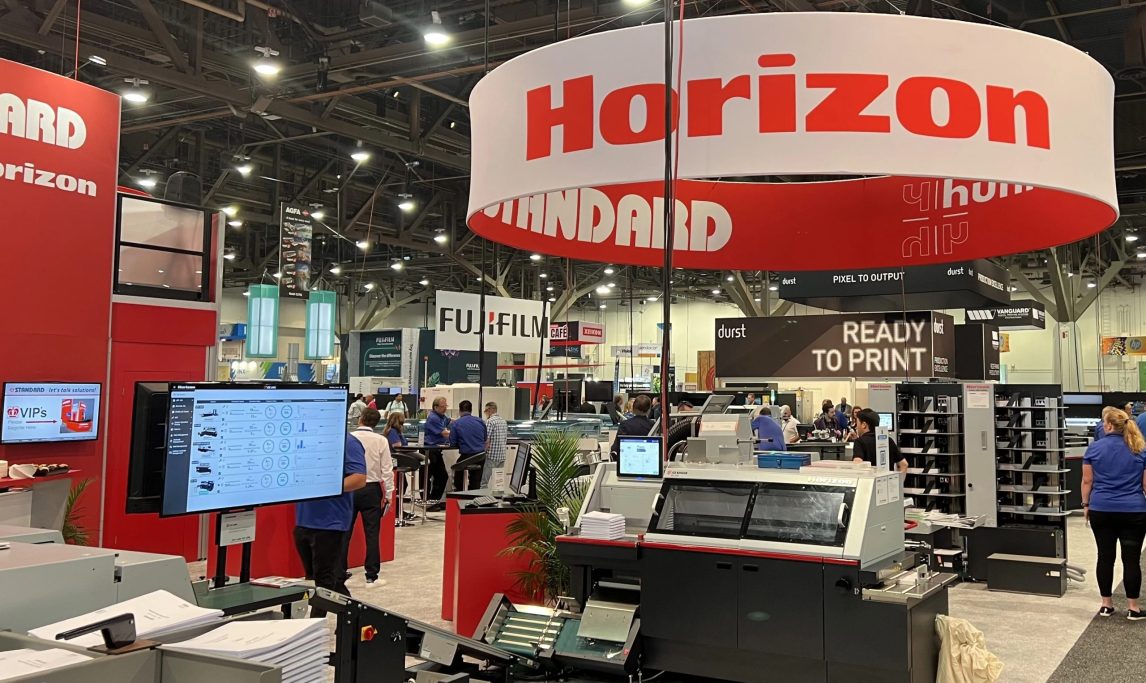
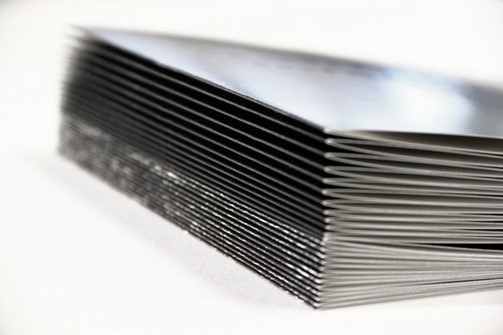
With the explosion of digital printing comes an ever-growing need for creasing. Cracking along the fold is a major headache for any print manufacturer. There is nothing worse than creating a beautiful, printed piece only to have the final look marred by unsightly cracking. Creasers eliminate cracking and protect the final look.
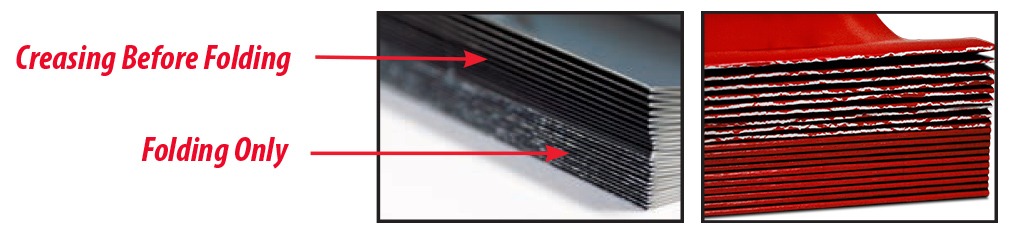
Creasing is very different from scoring, even thought both techniques are intended to protect a folded edge. For years with offset printing scoring was perfect. Ink soaks into the stock so although fibers may be cracking when the sheet is folded, the end product still looked great because there was no break in the color.
In today’s world of digital printing, in which toner lies upon the surface, we have to take a more aggressive approach to preparing sheets for folding. Creasing implied the use of a dedicated creasing matrix from brands like Graphic Whizard and Morgana with a channel and dye. The two sandwich the sheet and create a strong crease in the sheet, so that fibers do not break during folding.
Creasing and scoring are terms that are often used in place of one another but the truth is that they are quite different. Scoring is done with a rotary wheel that applies acute pressure to stretch paper fibers along a fold line. Creasing provides a much more pronounced affect by using an anvil and dye to strike the sheet.
What is Paper Creasing
Paper creasing the more modern method of preparing paper for folding. Creasing is done with a die matrix that has a male and female tool. The end result is a very consistent crease that will almost never crack. Paper creasing dies come in various sizes with something around 1.2 mm being a standard crease. A thicker paper may use wider crease such as 2 mm. Proper creasing is essential before running sheets through paper folders.
What is Paper Scoring?
Scoring is the old fashioned way of preparing paper to fold. For more on scoring and perforating equipment, see our full lineup. This method uses a blunt blade to plow a score down the sheet as it passes by. With traditional ink on paper printing this was usually enough to make a fold look nice. Modern printing processes that use toner on the surface of the sheet scoring is not always enough to eliminate cracking.
The boom of digital printing the market demand for creasing has been growing up too. Digital printing done with toner requires creasing over scoring due to the fact that toner lies on the surface of the printed sheet. In traditional offset printing with wet ink, the pigments will absorb into the stock. For that reason, scoring was usually enough to achieve good results. Even if the sheet cracked a little bit, it would not expose white paper fibers and diminish the final appearance.
Creasing Dye Matrix
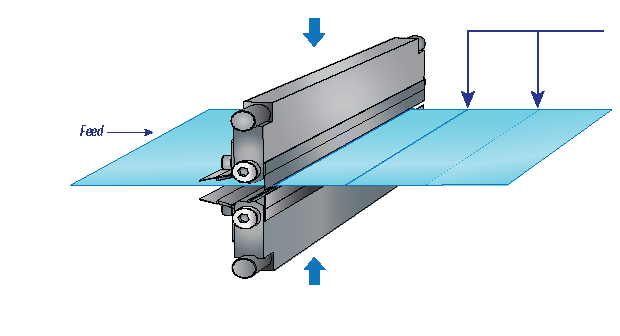
The core of every creaser is the dye unit. This is an assembly that impacts the stock to create the crease. It will always consist of an upper and lower dye that come together in a matrix to imprint the crease pattern onto the sheet. The width of the channel within the crease matrix dictates the width of the crease. In general, narrow machines come with a standard dye but will have optional narrow and wide dyes available for special applications.
Check out Horizon’s CRF-362 Creaser Folder
When Should You Crease vs Score?
Choosing between creasing and scoring depends on three factors: your paper stock, your print method, and your production volume.
Use creasing when: you’re working with digitally printed sheets, coated stock over 80 lb cover, or any job where fiber cracking would ruin the finished product. Creasing compresses the paper fibers without cutting them, creating a clean hinge that folds without splitting the printed surface. This is especially critical for toner-based digital prints, where the toner layer sits on top of the paper and is prone to cracking along fold lines.
Use scoring when: you’re working with lightweight uncoated stock, offset-printed materials, or jobs where a simple fold guide is sufficient. Scoring creates a shallow channel by displacing material, which works well on papers that naturally fold cleanly. However, scoring on heavy coated stock or digitally printed sheets often results in cracking — the scored line weakens the surface layer rather than creating a true hinge.
For production print shops handling a mix of digital and offset work, a dedicated creasing machine eliminates the guesswork. Modern paper creasers from brands like Graphic Whizard and Morgana handle both creasing and perforating in a single pass, which means you can crease digitally printed brochures and score lightweight inserts on the same equipment.
How Creasing Machines Work
A paper creasing machine uses a male rule (a raised rib) and a female channel to compress paper fibers into a hinge. Unlike scoring, which cuts into the surface, creasing pushes fibers apart internally — creating a fold line that bends cleanly without cracking the printed surface.
There are two main types of creasing equipment used in commercial print finishing:
Rotary creasers feed sheets through counter-rotating cylinders fitted with creasing rules. These machines handle high-volume production runs and are often combined with perforating and slitting capabilities. The Graphic Whizard CreaseMaster and FinishMaster series are examples of rotary creasers used in commercial binderies.
Platen creasers use a flat-bed press action to crease sheets one at a time. These are ideal for short runs, thick substrates, and specialty applications where precision matters more than speed. Morgana’s AutoCreaser Pro is a popular platen-style creaser for digital print shops.
Both types can be adjusted for different paper weights, crease depths, and crease positions. For shops processing a variety of substrates — from 80 lb text to 18 pt board stock — a creaser with adjustable rule depth and multiple crease positions per pass delivers the most flexibility.
Choosing the Right Paper Creaser for Your Shop
The right creasing machine depends on your production volume, sheet sizes, and whether you need additional finishing capabilities like perforating or slitting.
Entry-level (up to 1,000 sheets/day): Manual and semi-automatic creasers from Martin Yale and Count handle short runs and on-demand work. These are ideal for in-plant print departments and quick printers adding digital finishing.
Mid-volume (1,000-5,000 sheets/day): Semi-automatic creasers like the Graphic Whizard CreaseMaster or Morgana AutoCreaser Pro offer programmable crease positions, automatic sheet feeding, and multi-function capability (crease + perf + slit). These fit commercial print shops running a mix of digital and offset work.
High-volume (5,000+ sheets/day): Fully automatic inline creasers from Standard Horizon and Duplo integrate directly into your digital press workflow. These machines crease, perforate, slit, and cut in a single pass at speeds exceeding 10,000 sheets per hour.
Mid-State Litho carries 23+ creasing machines from brands including Graphic Whizard, Morgana, Count, Martin Yale, Duplo, and Standard Horizon. As an authorized dealer with factory-trained technicians, we provide installation, training, and ongoing service across Michigan and the Great Lakes region. Equipment financing is available through our partnership with Mitsubishi HC Capital.
Creasing vs Scoring vs Perforating: What’s the Difference?
Print finishing involves several techniques for preparing sheets for folding, tearing, or separation. Here’s how they compare:
Creasing compresses paper fibers to create a fold hinge. Best for heavy stocks and digital prints where cracking is a concern. The paper stays intact — fibers are displaced, not cut.
Scoring creates a shallow indentation or channel in the paper surface. Works well on lightweight uncoated stock. On heavy or coated papers, scoring can cause cracking because it weakens the surface layer.
Perforating punches a series of small holes or slits to create a tear line. Used for reply cards, coupons, tickets, and any application where a clean tear-off is needed. Many creasing machines also perforate, making them versatile finishing tools.
Many modern finishing machines combine all three functions. A single Graphic Whizard FinishMaster, for example, can crease, score, perforate, and slit in one pass — reducing handling and speeding up production. For shops that need all three capabilities, a multi-function paper creaser is the most cost-effective investment.
Frequently Asked Questions
What is the difference between creasing and scoring paper?
Creasing compresses paper fibers internally to create a fold hinge without cutting the surface. Scoring cuts a shallow channel into the paper to guide folding. Creasing is preferred for digitally printed sheets and heavy coated stock because it prevents cracking along the fold line. Scoring works well on lightweight uncoated papers where fiber cracking is not a concern.
Do I need a creasing machine for digital printing?
Yes, if you’re folding digitally printed sheets on stock heavier than 80 lb cover. Digital toner sits on the paper surface and cracks when folded without creasing. A dedicated paper creaser eliminates this problem and produces a professional finish. Even short-run digital shops benefit from a semi-automatic creaser for brochures, greeting cards, and booklet covers.
What paper weight requires creasing instead of scoring?
As a general rule, any coated stock over 80 lb cover (216 gsm) should be creased rather than scored. Uncoated stocks can typically be scored up to 100 lb cover without cracking issues. Digitally printed sheets should always be creased regardless of weight, because the toner layer is more brittle than offset ink.
Can one machine do both creasing and perforating?
Yes. Most modern creasing machines — including models from Graphic Whizard, Morgana, and Duplo — can crease, perforate, score, and slit in a single pass. This multi-function capability makes them the most versatile finishing tool in a production print shop. Mid-State Litho carries 23+ models with combined creasing and perforating capability.
How much does a paper creasing machine cost?
Paper creasing machines range from approximately $1,500 for manual desktop models to $25,000+ for fully automatic high-speed creasers with inline feeding. Mid-volume semi-automatic creasers — the most popular choice for commercial print shops — typically fall in the $5,000-$15,000 range. Mid-State Litho offers equipment financing through Mitsubishi HC Capital to make any creaser affordable for your operation.
Mid-State Litho, Inc.
5459 Fenton Rd.
Flint, MI 48507
midstatelitho.com